
One of the most critical phases of any groundworks project occurs during pre-construction, when project risk and budgets are effectively managed.
Developers and site managers need clear information, confirmed approvals, and a practical plan for access, services, surveys, and sequencing.
A construction preparation checklist is designed to help project teams prepare for pre-construction groundworks, reducing delays and last-minute surprises. With the right preparation, your groundworks contractor can price accurately, plan safely, and start with a clear understanding of the site.
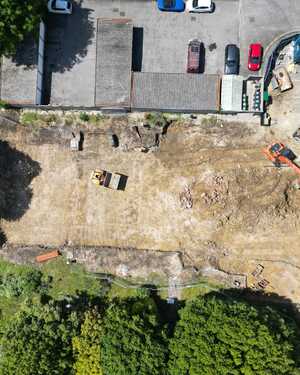
Reducing commercial groundworks costs through pre-planning
How proactive site planning maximises cost savings and prevents downtime
Strong value engineering relies on understanding site requirements before costs are locked in. Ground conditions, access, service routes, levels, and drainage all dictate how a project should be priced and delivered.
Involving a contractor during the initial planning phase gives the wider project team a clearer view of practical constraints. A collaborative approach highlights where a design may be difficult to build, where levels could be adjusted, or where sequencing might create avoidable downtime.
True cost savings in groundworks are achieved proactively by securing key decisions before on-site changes drive up expenses.
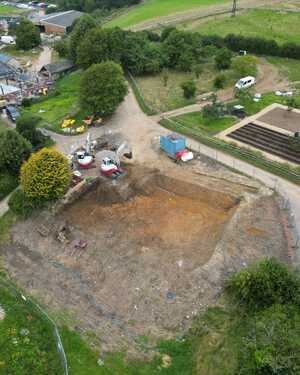
Earthworks strategy and material management
How on-site soil reuse reduces vehicle movements and logistics costs
On many sites, the movement of soil and excavated material has a major impact on cost. Haulage, disposal, importation, and storage all require careful planning, particularly for developments with changing levels or limited working space.
A detailed earthworks strategy can identify materials that may be suitable for on-site reuse, subject to testing, specification, and regulatory requirements.
This can reduce unnecessary vehicle movements, lower disposal costs and support a more efficient programme. Where material needs to leave site, clear classification and planned haul routes help avoid disruption once excavation begins.
Design drainage with the whole site in view
Systems work when levels and access align
Drainage is one of the areas where smart planning can protect both budget and programme. Poorly coordinated drainage can create clashes with foundations, roads, services and finished levels, leading to redesign at the wrong point in the build.
By reviewing foul & surface water drainage at the earliest possible stage, the team can align pipe routes, attenuation, chambers, outfalls and maintenance access with the rest of the site – particularly important where SuDS features, permeable surfaces or adopted drainage are involved. A practical drainage strategy reduces rework and helps create infrastructure that performs reliably after handover.

Commercial risk management in groundworks planning
Mapping lead times early to eliminate unexpected schedule pressure
Highway and sewer adoption routes are subject to strict statutory requirements that require significant lead time. If Section 38 & 278 works or sewer requisitions are part of the scheme, design checks, permits, inspections, testing and reinstatement must be considered from the outset.
Experienced groundworks contractors help identify exactly where approvals impact the critical path. Factoring statutory lead times into the initial construction programme provides developers, main contractors, and QS teams with total clarity on risk, provisional sums, and potential schedule pressure.
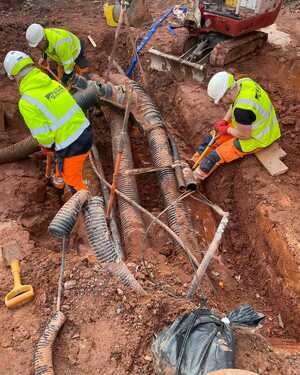
Sequence work around live constraints
Clear phasing reduces disruption and downtime
Efficient site planning depends on knowing which activities need to happen first, which can overlap, and which should be protected from clashes. Access roads, drainage runs, service trenches, foundations and external works all compete for space on a busy site.
Where utility diversions are required, the programme must allow for safe coordination with providers and protection of live services. On constrained sites, temporary access, haul roads and working platforms may need to be installed before wider works can progress. A planned sequence keeps plant, labour and inspections moving in the right order.
Protect value through quality and safety
Value engineering should refine the approach, rather than strip out essential performance. The best results come from finding smarter ways to deliver the required specification while maintaining safety, compliance and durability.
That applies across foundation construction, sub-structure block and brickwork, asphalt surfacing & external finishings and retaining structures. Each stage must still meet engineered requirements, site tolerances and long-term use. Good value comes from accuracy, coordination and fewer return visits.
N&G Groundworks supports developers, main contractors and commercial teams across Dorset, Devon and Somerset with practical advice and reliable delivery. For projects where cost, programme and buildability need close control, early input can create a clearer route through the groundwork phase.
Posted on April 29th 2026
 Updating page...