

The importance of sewer requisitions in a new development project
A reliable foul and surface water connection sits behind almost every successful build. When a site cannot reach the existing public sewer network by normal means, a sewer requisition can provide a formal route to bring new pipework across third-party land, so the development can discharge to the public system.
In the South West of England, including Dorset, Somerset and East Devon, working with a contractor that understands the Wessex Water-approved sewer requisition process will help ensure that your project doesn't encounter programme drift, late redesign, and last-minute negotiations that can delay groundworks and plot delivery.
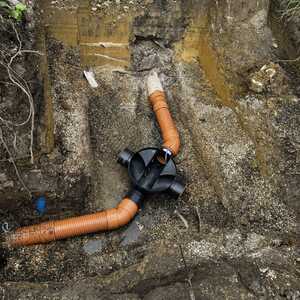
What is a sewer requisition?
A sewer requisition is an option when a development has no access to a public sewer because third-party land lies in the way, and private negotiation cannot secure a route.
It is a mechanism that allows the sewerage undertaker to use statutory powers to lay a sewer, subject to conditions and at the requisitioner’s cost. In practice, it is a clear route to securing an offsite connection when ownership boundaries are the barrier.
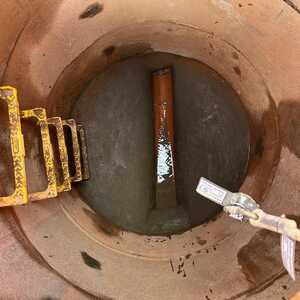
When is a sewer requisition required?
Requisitions tend to come into play when a site boundary stops short of the public sewer, the only feasible route crosses land in different ownership, and the project needs a dependable connection rather than a private arrangement that may be hard to maintain in the long-term.
Full planning permission needs to be granted before land entry can be served for requisition works. For surface water, there can also be an added consent step if the discharge is to a watercourse, as riparian owner consent is required.
The approval route for sewer requisitions
The practical starting point is an application with supporting details, so Wessex Water can assess the proposal and confirm what is required. There are different delivery routes involved: one option is a water company-delivered requisition, which designs and lays an offsite sewer through third-party land using statutory powers of entry, subject to contract.
On some schemes, there is also a developer-delivered requisition route, with staged review and screening. The detail varies, but the goal is the same – a compliant connection delivered through an agreed process.
Design, adoption and the link to Section 104
Requisitions often sit alongside the wider question of what becomes adoptable infrastructure. New sewers and pumping stations may be adopted under a Section 104 agreement, with adoptable sewers designed and constructed to the relevant standards.
This is important for developers as design decisions made early can affect construction details, inspection requirements and future responsibilities. It is also where onsite drainage design ties into the bigger network, so foul and surface water drainage planning needs to align with the requisition strategy from the outset
Construction, coordination and reinstatement
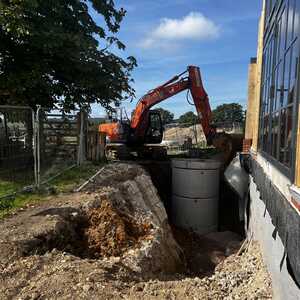
Once approvals and the delivery route are confirmed, the construction phase needs careful sequencing with the rest of the groundworks package. Offsite sewer works can involve excavations, chambers, manholes, and, in some cases, pumping stations, plus reinstatement of any surfaces affected.
Where live assets are involved, competent supervision and clear communication become central to keeping the site safe and the programme predictable. This is also where utility interfaces can surface, particularly if existing services share corridors or crossings, making utility diversions a relevant consideration on many constrained sites.
How N&G Groundworks supports sewer requisitions in the Wessex Water region
N&G Groundworks is a Wessex Water-approved contractor for sewer requisitions, supporting developers and contractors with the planning input and on-site delivery needed to connect new sites to the public network.
Our team manages the process from early coordination through to installation and reinstatement, with experience across manholes, chambers and complex drainage infrastructure. If your development is likely to require an offsite connection route, get in touch today.
Posted on December 17th 2025
 Updating page...