
Groundworks across the South West require a practical understanding of regional conditions.
Dorset, Devon, and Somerset each bring distinct soil profiles, access constraints, drainage requirements, and local authority processes, so a single approach rarely yields the best results.
For developers, planners and contractors, regional experience helps reduce uncertainty before work begins.
N&G Groundworks works across Dorset, Somerset and Devon, supporting residential, commercial, educational, retail and public sector schemes with site-specific planning, safe delivery and clear coordination from the ground up.
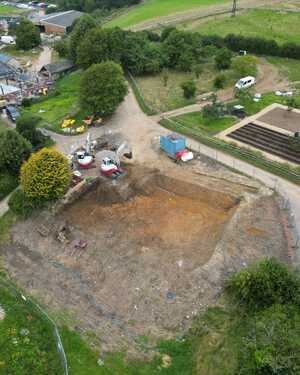
Local groundworks knowledge shapes early planning
Each site needs its own groundwork strategy
Ground conditions dictate almost every preliminary decision on a construction project. Foundation depths, drainage design, excavation methods, and material handling all depend entirely on what is found below the surface.
Similarly, the choice of heavy machinery and the layout of site access routes rely heavily on these subsurface findings.
Regional groundworks expertise translates site data into practical action. While not a replacement for structural engineers, a local contractor helps project teams identify site constraints well before excavation begins.
Specific local knowledge is crucial across Dorset, Devon, and Somerset to navigate the unique challenges of coastal terrains, rural logistics, steep inclines, heavy clay, and complex drainage.
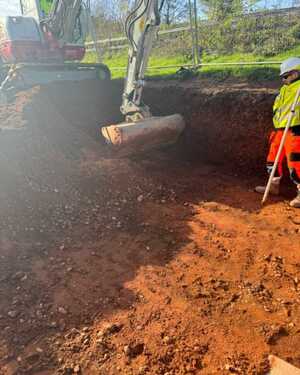
Dorset ground conditions
Coastal sites, clay and sloping land need careful control
Dorset developments can involve a wide mix of ground conditions, from inland plots to exposed coastal areas and sloping sites. In parts of the county, clay soils, groundwater and erosion risks can influence excavation, temporary works and foundation planning.
For contractors and developers, this makes early investigation essential. Earthworks need to be planned around soil behaviour, site levels and safe material movement. On sloping plots, retaining structures may be required to create stable working areas and support the finished development. Drainage strategy also needs close attention, particularly where runoff routes, outfalls and ground permeability are key constraints.
Devon groundworks
Varied terrain calls for flexible methods
Groundworks Devon projects can range from coastal developments and town centre schemes to rural sites with difficult access or uneven ground. It's this kind of variety that can place pressure on sequencing, plant selection and site logistics.
Foundation choices may need to respond to variable bearing conditions, while drainage depths and routes must suit the natural fall of the land.
On sites with restricted entrances, temporary access and material storage need to be planned carefully to keep work safe and efficient. N&G’s experience across foundation construction, foul & surface water drainage and utility diversions supports projects where ground conditions and access need to be managed together.
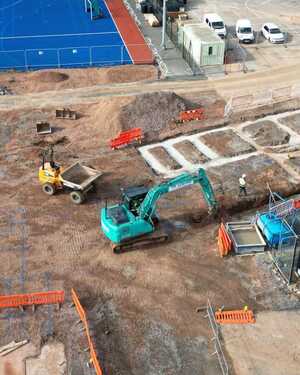
Somerset groundworks
Drainage, levels and infrastructure need joined-up thinking
Somerset groundworks projects can bring their own mix of subsoils, rural access considerations and surface water challenges. On residential and commercial developments, drainage is often one of the most important early design areas, particularly where attenuation, private drainage, adopted sewers, or permeable surfaces form part of the plan.
A coordinated foul & surface water drainage strategy helps align pipework, chambers, tanks and outfalls with finished levels and future maintenance access. Where development infrastructure connects into wider networks, sewer requisitions may also need to be programmed carefully so approvals, installation and testing do not hold up later stages.
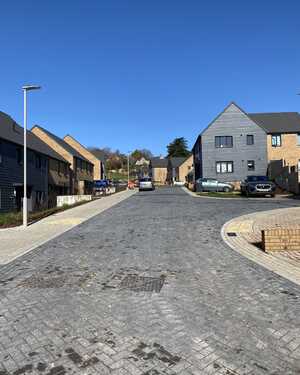
Local authority and adoption requirements
Approvals influence design, programme and delivery
Regional delivery also means working with the right local authority processes. For developments that include new roads, junction improvements, or works to existing highways, Section 38 & 278 works require detailed coordination, permits, inspections, and the adoption of standards.
The same principle applies to drainage, sewer connections and SuDS. Planning requirements increasingly demand that surface water be properly considered from the outset, with appropriate operational standards and long-term maintenance arrangements.
Bringing adopted works and drainage requirements into the early programme helps avoid late changes around roads, levels, kerbs, chambers and service routes.
Matching machinery and methods to the site
Practical choices help protect the programme
The right groundwork method depends on the realities of the site. A large open development may allow efficient bulk excavation and clear haul routes, while a tight town centre or live school environment needs more controlled phasing, access management and communication.
N&G Groundworks operates modern machinery and plans works around site-specific requirements. This can include reduced-level excavation, temporary entrances, haul roads, live service coordination, substructure works, and external finishes. Matching plant, labour and sequencing to the site helps reduce downtime and creates safer working conditions for everyone involved.
A regional contractor for complex sites
Reliable groundworks come from combining technical planning with local understanding. Dorset, Devon and Somerset each require careful attention to ground conditions, drainage, approvals and access, but the goal remains consistent: prepare the site properly so the wider build can progress with confidence.
N&G Groundworks supports developers, main contractors, local authorities and commercial teams across the region, delivering works from early site preparation through to drainage, foundations, utilities, surfacing and finishes. If your next project needs a groundworks contractor with practical South West experience, speak to the team today!
Posted on April 29th 2026
 Updating page...