
Existing gas, water and electric mains can influence access, drainage routes, finished levels, foundations and construction sequencing across a development.
Where a diversion is required, advance planning gives the project team time to understand the constraint, coordinate with the relevant provider and build the work into the programme.
N&G Groundworks delivers utility diversions across the South West, supporting developers and contractors with safe, coordinated works around live services.
Identify live services before work starts
Surveys and records give the programme a reliable starting point
Service information obtained during the initial stages helps the project team understand what is running through the site and where further investigation is needed. Utility records, site surveys, and on-site locating should be reviewed together, as drawings may not provide a complete picture of an asset’s exact position or depth.
Establishing key details before excavation allows designers, commercial teams and site managers to assess diversion requirements, protection zones and access restrictions, while also giving estimators a stronger basis for pricing temporary works and programme allowances.
Plan diversions around the development layout
Service routes influence levels, drainage and construction sequencing
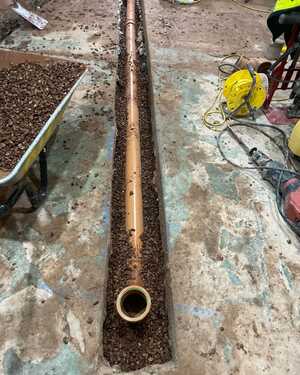
A proposed diversion needs to work with the wider site design. New service routes can affect plot layouts, road construction, drainage runs and future maintenance access, so the route should be considered alongside the principal groundwork packages.
Coordination with foul and surface water drainage, foundations and external works reduces the chance of one below-ground system blocking another – helping teams sequence excavation logically, maintain workable haul routes and protect finished areas from being reopened later to accommodate a service that could have been planned earlier.
Timely coordination with utility providers
Approvals and provider requirements need programme space
Gas, water, and electric diversions often require direct coordination with the relevant utility company, particularly when live assets are being altered or replaced. Designs, approvals, access requirements and working methods can all influence when the diversion can take place.
N&G Groundworks is Achilles UVDB-accredited and experienced in coordinating works with utility providers. At Shiremoor Hill in Somerset, N&G carried out an HV electric cable diversion as part of enabling works for a future 39-home development, working closely with WPD to dismantle overhead cables and install the new electric main.
Control risk during excavation
Safe digging and temporary works protect people and live assets
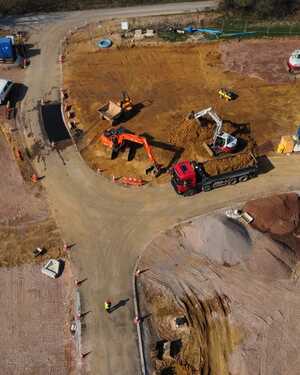
Excavation around live services, by its very nature, demands a controlled approach. Confirmed service locations, suitable exclusion zones and clearly planned digging methods help reduce the risk of strikes and disruption.
Ground conditions, excavation depth, and the proximity of other structures may also necessitate temporary support or additional protection during the works. Plant movements need to be planned around known service routes, with site teams working from current information. Clear coordination gives supervisors a solid basis for managing changing conditions as excavation progresses.

Keep interfaces with other groundworks clear
Drainage, roads and foundations need coordinated routes
Utility diversions seldom sit in isolation from the rest of the groundwork programme. A revised electric main may cross a future drainage run, a water main may influence foundation excavation, or a gas route may need to pass beneath areas scheduled for surfacing.
Proactively mapping interfaces allows the team to resolve clashes before construction reaches them. Where Section 38 & 278 works or asphalt surfacing and external finishings form part of the project, diversion timing also needs to account for highway interfaces, kerb lines, final levels and reinstatement requirements.
Plan reinstatement as part of the diversion
A completed diversion includes the surfaces and areas affected by the work
Once a service has been diverted, the excavated areas need to be made safe and restored to the required specification. Reinstatement may involve compacted fill, road build-ups, footways, kerbs or other external finishes, depending on the location of the works.
Planning these requirements before excavation helps the team order the right materials and coordinate inspections or handovers at the correct stage – supporting a cleaner transition into the next phase of construction.
How we can help with utility planning
N&G Groundworks can support utility diversion works from coordination through excavation, installation and reinstatement, with a focus on safe delivery and clear interfaces with the wider groundworks package.
Our experience across residential, commercial and infrastructure projects helps teams plan around live services with greater certainty and keep essential works moving in the right sequence.
Posted on August 28th 2026
 Updating page...